
Hyperbaric Oxygen Therapy in Cosmetic and Plastic Surgery
A peer-reviewed evidence summary for cosmetic and plastic surgery professionals. Published by Cure8, Double Bay, Sydney.
A Note on This Blog
This is a verified summary of the peer-reviewed evidence supporting hyperbaric oxygen therapy (HBOT) in cosmetic and plastic surgery. It is intended for clinical professionals considering HBOT as part of a perioperative pathway.
Every citation in this document has been independently verified against PubMed and the source journal. Every effect size and protocol detail is drawn from the source paper, with direct quotation where appropriate. The document is conservative by design: where the evidence is strong, it says so; where the evidence is suggestive, it says that too.
What follows covers four things. What HBOT does. Why it works. How it works. And the studies that show it.
Contents:
01 What HBOT does: The clinical effects observed across the literature.
02 Why it works: The physiological mechanism, in plain language.
03 How it works: The protocols described in the evidence base.
04 The studies: Procedure by procedure, with effect sizes and citations.
05 Pre-operative protocol: Preconditioning the tissue before surgery.
06 Post-operative protocol: Adjunctive recovery support.
07 Salvage protocol: Ischaemic complications, filler vascular occlusion, compromised flaps.
08 References: Twelve verified peer-reviewed sources.
01 / What HBOT Does
The clinical effects observed across the literature.
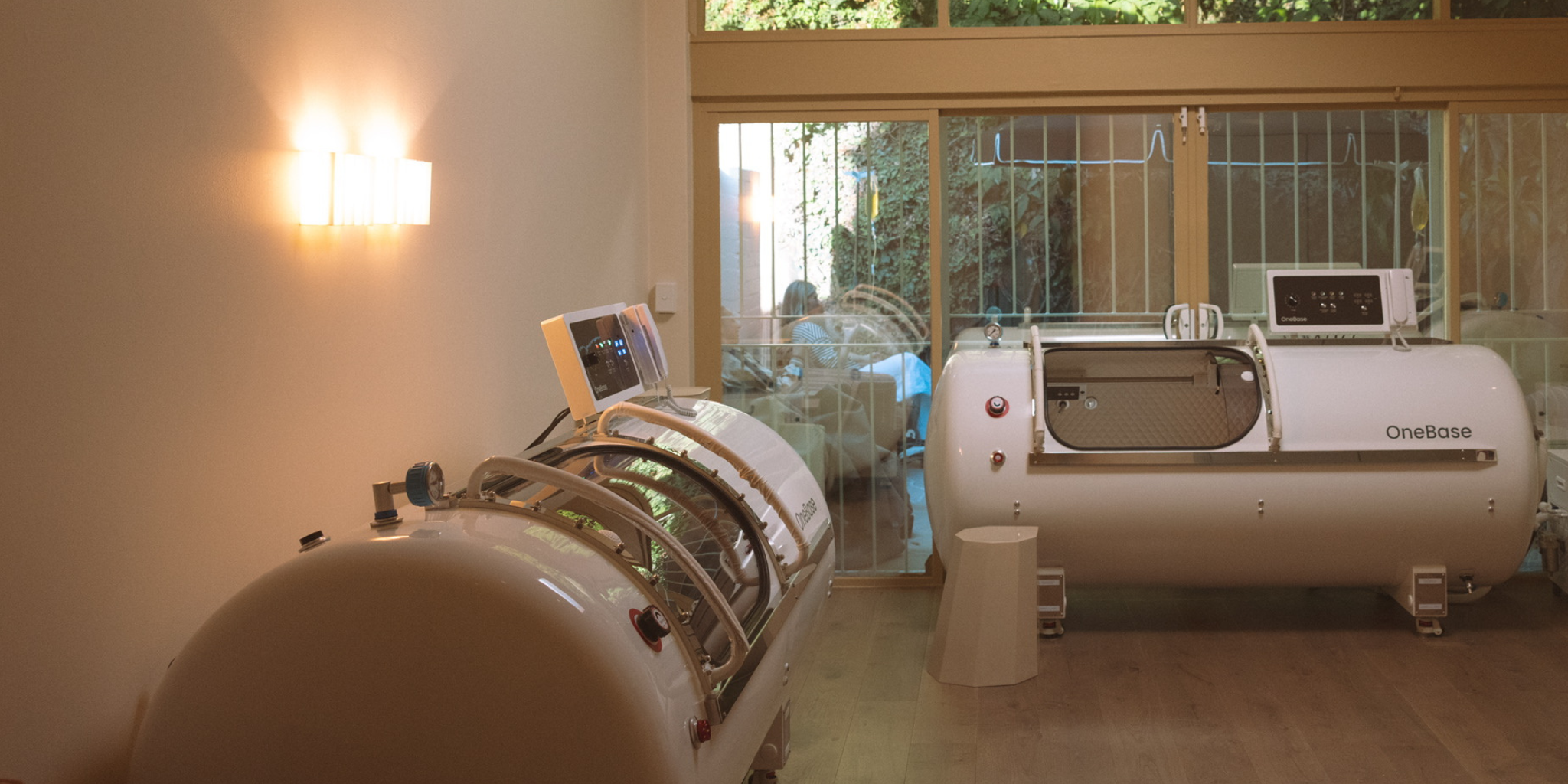
Across more than a decade of peer-reviewed research in cosmetic and plastic surgery, hyperbaric oxygen therapy has been associated with four consistent clinical effects.
75% fewer post-op complications
In high-risk abdominoplasty, preoperative HBOT was associated with overall complications falling from 32.6% to 8.4% (Friedman 2019).
64% faster wound healing
In facelift recovery, HBOT-treated patients healed in a mean of 13.3 days vs 36.9 days in controls (Neel & Mortada 2023).
35% less bruising at day 7
In rhytidectomy patients, perioperative HBOT reduced bruising by 35% at postoperative day 7 and 30% at day 10 (Stong & Jacono 2010).
0% infection or necrosis
In the Friedman 2019 HBOT cohort, zero infections and zero necrosis events were recorded across 83 patients.
These are not isolated findings. Across multiple independent studies, the direction of effect is consistent: HBOT supports faster, cleaner recovery and reduces the rate and severity of post-surgical complications.
02 / Why It Works
The physiological mechanism, in plain language.
Surgery creates a controlled injury. Tissue is cut, blood vessels are disrupted, and the local oxygen supply is reduced exactly where it is needed most. The body's response to that injury, including swelling, bruising, scarring, and the risk of infection or tissue loss, is largely a story about oxygen.
Hyperbaric oxygen therapy raises the partial pressure of oxygen in the blood plasma to levels that cannot be achieved by breathing at sea level. The result is a marked, temporary increase in the amount of oxygen reaching damaged tissue, including tissue that has lost its normal vascular supply.
Angiogenesis
HBOT stimulates the formation of new blood vessels in healing tissue, restoring the supply line surgery temporarily disrupts.
Antioxidant induction
Repeated HBOT exposure upregulates the body's own antioxidant defences, reducing the oxidative damage that follows surgical injury.
Anti-inflammatory effect
HBOT downregulates pro-inflammatory cytokines and reduces neutrophil adhesion, moderating the inflammatory response that drives swelling and bruising.
Antimicrobial action
Elevated tissue oxygen levels are directly bactericidal against anaerobic bacteria and enhance the function of white blood cells fighting infection.
The four mechanisms above are not theoretical. They are documented across the hyperbaric medicine literature and form the physiological basis for HBOT's accepted indications in wound healing, radiation injury, and ischaemic tissue salvage.
03 / How It Works
The protocols described in the evidence base.
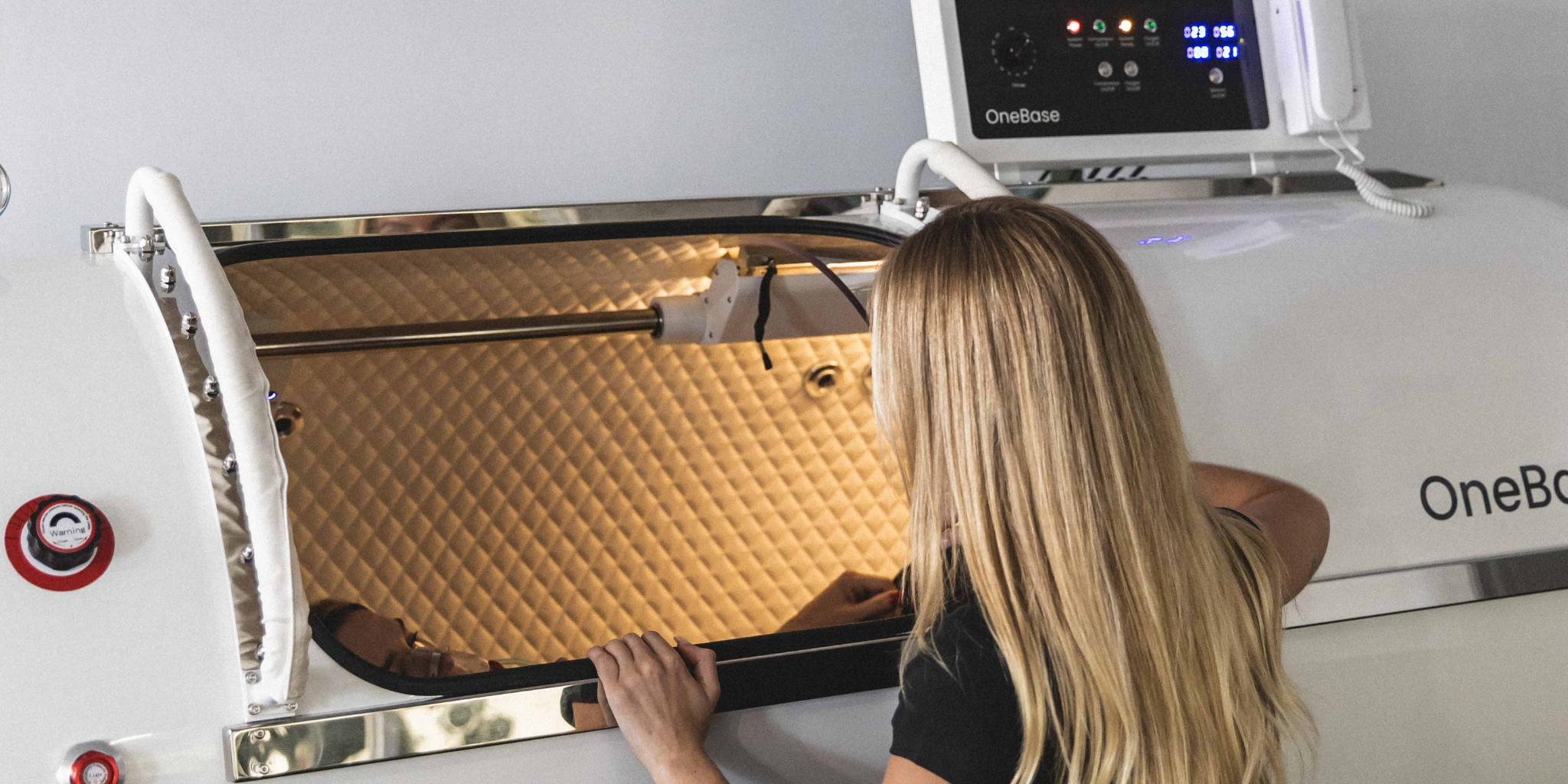
Across the cosmetic and plastic surgery literature, HBOT is delivered through three distinct clinical pathways. Each has its own protocol, its own evidence base, and its own role in the perioperative timeline.
Pre-operative: Preconditioning
Delivered in the days before surgery to prime the tissue. The strongest evidence base, anchored by a propensity-matched cohort of 356 abdominoplasty patients.
2.0 ATA / 90 min / 1 to 3 sessions
Post-operative: Recovery support
Delivered after surgery, typically beginning within 24 to 72 hours, to accelerate healing and reduce bruising. Supported by facelift studies and a field-level meta-analysis.
2.0 ATA / 60 to 90 min / 5 to 10 sessions
Salvage: Ischaemic complications
Delivered when tissue is at risk: filler-induced vascular occlusion, compromised flaps, threatened skin. The deepest evidence base across the hyperbaric literature.
2.0 to 2.5 ATA / 60 to 90 min / 20 to 40 sessions
Detailed protocols for each pathway, including the source studies, follow in sections 05 to 07.
04 / The Studies
What the evidence indicates, procedure by procedure.
The peer-reviewed literature on HBOT in cosmetic and plastic surgery spans six procedure categories. The summary below cites the primary studies and the effect sizes they report. Detailed protocols follow.
Abdominoplasty and body contouring — Preoperative preconditioning
Friedman 2019 propensity-matched cohort of 356 patients. Overall complications fell from 32.6% to 8.4% in the HBOT group (P < 0.001). Zero infections and zero necrosis events recorded. The largest controlled study in the field.
Facelift (rhytidectomy) — Postoperative recovery
Stong & Jacono 2010 reported a 35% reduction in bruising at postoperative day 7. Neel & Mortada 2023 reported wound healing in a mean of 13.3 days with HBOT vs 36.9 days in controls (P < 0.001). Rossi Meyer 2025 (Stanford) systematic review concludes the available studies indicate HBOT supports faster postoperative recovery, particularly in rhytidectomy.
Compromised flaps and grafts — Salvage therapy
Francis & Baynosa 2017 and Yousef 2022 aggregate data across more than 1,500 patients in 23 trials. Flap and graft survival rates with HBOT: 62.5 to 100%, compared with 35.0 to 86.5% in controls. The deepest evidence base in the cosmetic and reconstructive HBOT literature.
Filler-induced vascular occlusion — Salvage therapy
Madero 2024 (Aesthetic Plastic Surgery) provides an explicit protocol recommendation: 2.0 ATA, 60 minutes per session, with timely intervention. Hong 2019 documents a single severe case successfully managed with 43 HBOT sessions. Simman & Bach 2022 report a four-case series at 2.5 ATA with favourable outcomes across all cases.
Aesthetic surgery mixed cohorts — Postoperative recovery
Aguilar & Hoyos 2024 reported on 296 consecutive aesthetic plastic surgery patients (liposculpture, abdominoplasty, breast, fat transfer) receiving postoperative HBOT. Overall complication rate 10.7% with zero infections and zero necrosis. Mortada 2025 meta-analysis: pooled mean healing time 11.30 days across 11 studies and 734 patients.
Reduction mammaplasty (irradiated breast) — Perioperative support
Snyder 2010 internal-control case series in patients with prior radiation therapy. Complication rates in irradiated tissue were equivalent to non-irradiated tissue when HBOT was used perioperatively, suggesting HBOT can normalise wound healing in tissue compromised by prior radiation.
05 / Pre-operative HBOT
Preconditioning the tissue before the scalpel.
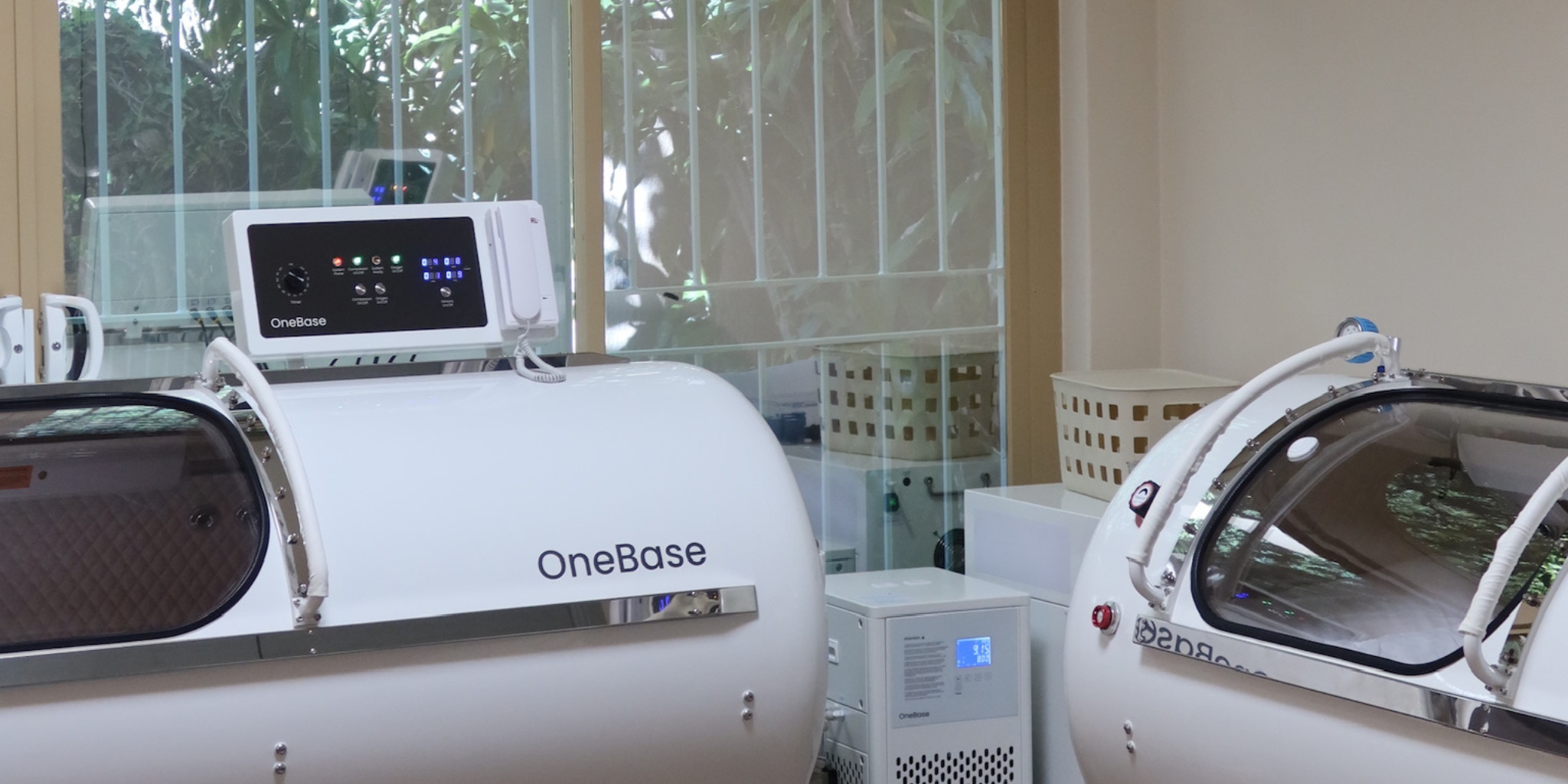
The strongest preoperative HBOT evidence in cosmetic surgery comes from Friedman et al. 2019, a propensity-matched retrospective cohort study of 356 patients undergoing abdominoplasty or lower body lift, with the majority also receiving concomitant liposuction.
The Protocol — As described in Friedman 2019
Pressure: 2.0 atmospheres absolute (ATA)
Duration: 90 minutes of 100% oxygen, with 5-minute air breaks every 20 minutes
Sessions: 1 to 3 sessions total. Of the 83 HBOT patients in the cohort, 53 received one session, 14 received two, and 16 received three.
Timing: The final HBOT session was conducted the day before surgery.
Reported Outcomes
Overall complications: Control 32.6% / HBOT 8.4% / P < 0.001
Necrosis: Control 6.2% / HBOT 0% / P = 0.016
Infection: Control 12.1% / HBOT 0% / P = 0.001
Hypertrophic scar: Control 7.3% / HBOT 0% / P = 0.006
Multivariate analysis adjusted odds ratio: 0.188 (95% CI 0.082 to 0.432, P < 0.001). Propensity-matched subset (63 vs 63): complication rate 39.7% in control vs 6.3% in HBOT, P < 0.001.
Who Benefits Most
The Friedman cohort included patients commonly classified as higher risk for abdominoplasty: prior abdominal surgery, smoking history, diabetes, prior radiation, or other comorbidity. For this population, preoperative HBOT preconditioning is the best-supported indication in the cosmetic surgery literature.
06 / Post-operative HBOT
Adjunctive recovery support.
Postoperative HBOT is used to accelerate recovery after surgery. Two facelift studies and a 296-patient aesthetic surgery cohort define the current evidence base.
Facelift — Protocols described in the literature
Stong & Jacono 2010: N=13 / 2.0 ATA / 60 min / 5 sessions total / 2 preop, then PODs 3, 4, 5
Neel & Mortada 2023: N=20 / 2.0 ATA / 78 min (mean) / Mean 7.22 sessions / Within 24 hours of surgery
What the studies reported
Stong & Jacono 2010. Bruising reduced by 35% at postoperative day 7 and 30% at day 10. The study used the Stong-Jacono protocol described above and reported statistically significant effects on the primary outcome.
Neel & Mortada 2023. Mean time to wound healing was 13.3 days in the HBOT group compared with 36.9 days in the control group (P < 0.001). The first HBOT session was initiated within 24 hours of surgery, with patients receiving a mean of 7.22 sessions.
Mixed aesthetic surgery cohort
Aguilar & Hoyos 2024 reported on 296 consecutive aesthetic surgery patients (liposculpture, abdominoplasty, breast interventions, fat transfer) receiving postoperative HBOT initiated 24 hours after surgery. Overall complication rate was 10.7%, with zero infections and zero necrosis events. Return-to-work times: 10 days for liposuction, 3 days for breast interventions, 21 days for abdominoplasty.
Meta-analysis
Mortada 2025 pooled 11 aesthetic surgery HBOT studies covering 734 patients (416 receiving HBOT). The pooled mean healing time was 11.30 days (95% CI 10.46 to 12.14). Patient satisfaction in early follow-up was reported at up to 88.2%.
07 / Salvage HBOT
When tissue is at risk.
Salvage HBOT is delivered when tissue is ischaemic, compromised, or threatened. This is the deepest evidence base in the hyperbaric literature overall, and three salvage pathways are clearly described.
Pathway One / Compromised Flaps and Grafts
Francis & Baynosa 2017 and Yousef 2022 aggregate data across 23 trials and more than 1,500 patients (957 HBOT, 583 controls). Flap and graft survival rates with HBOT ranged from 62.5 to 100%, compared with 35.0 to 86.5% in controls. The studies emphasise that timing is critical: efficacy is highest when HBOT is initiated within 48 hours of compromise being recognised.
Pressure: 2.0 to 2.5 ATA
Duration: 60 to 80 minutes per session
Frequency: Once daily
Initiation: As soon as possible after compromise is recognised, ideally within 48 hours.
Pathway Two / Filler-Induced Vascular Occlusion
Madero 2024 (Aesthetic Plastic Surgery) reviews the role of HBOT in filler-induced vascular occlusion and provides an explicit protocol recommendation. HBOT is delivered alongside primary FIVO management (hyaluronidase, vasodilators) as adjunctive support for tissue salvage.
Pressure: 2.0 ATA
Duration: 60 minutes per session
Initiation: As soon as the occlusion is identified. Timely intervention is emphasised throughout the literature.
Pathway Three / Cosmetic Surgery Ischaemic Complications
Simman & Bach 2022 published a four-patient case series covering HA filler nasal tip necrosis, HA filler chin asymmetry, abdominoplasty wound necrosis, and a post-Mohs flap. All four cases were managed at 2.5 ATA, with 5 to 39 dives per case, demonstrating favourable wound healing outcomes across the full range of cosmetic-surgery-specific ischaemic events.
08 / References
Twelve verified peer-reviewed sources. Each citation has been independently verified against PubMed and the source journal. PMIDs and DOIs are accurate as of the date of preparation.
01. Stong BC, Jacono AA. Effect of perioperative hyperbaric oxygen on bruising in face-lifts. Arch Facial Plast Surg. 2010;12(5):356-358. PMID 20855782 / DOI 10.1001/archfacial.2010.66
02. Neel OF, Mousa AH, Al-Terkawi RA, Bakr MM, Mortada H. Assessing the efficacy of hyperbaric oxygen therapy on facelift outcomes: a case-control study. Aesthet Surg J Open Forum. 2023;5:ojad065. PMID 37529413 / DOI 10.1093/asjof/ojad065
03. Friedman T, Menashe S, Landau G, et al. Hyperbaric oxygen preconditioning can reduce postabdominoplasty complications: a retrospective cohort study. Plast Reconstr Surg Glob Open. 2019;7(10):e2417. PMID 31772875 / DOI 10.1097/GOX.0000000000002417
04. Aguilar HA, Ramirez BA, Serrano HM, Villabona SJ, Hoyos AE, Varela A. Experience of hyperbaric chamber usage in aesthetic plastic surgery practice for recovery and complication prevention. Plast Reconstr Surg Glob Open. 2024;12(11):e6264. PMID 39507315 / DOI 10.1097/GOX.0000000000006264
05. Snyder SM, Beshlian KM, Hampson NB. Hyperbaric oxygen and reduction mammaplasty in the previously irradiated breast. Plast Reconstr Surg. 2010;125(6):255e-257e. PMID 20517072 / DOI 10.1097/PRS.0b013e3181cb67d0
06. Francis A, Baynosa RC. Hyperbaric oxygen therapy for the compromised graft or flap. Adv Wound Care (New Rochelle). 2017;6(1):23-32. PMID 28116225 / PMCID PMC5220535 / DOI 10.1089/wound.2016.0707
07. Yousef GM, et al. Can hyperbaric oxygen salvage a compromised local/regional skin flap? Laryngoscope. 2022. DOI 10.1002/lary.30160
08. Madero J, Salvador M, Kadouch J, Munoz-Gonzalez C, Fakih-Gomez N. Role of hyperbaric oxygen in filler-induced vascular occlusion. Aesthet Plast Surg. 2024;48(14):2713-2721. PMID 38459381 / DOI 10.1007/s00266-024-03920-7
09. Hong WT, Kim J, Kim SW. Minimizing tissue damage due to filler injection with systemic hyperbaric oxygen therapy. Arch Craniofac Surg. 2019;20(4):246-250. PMID 31462016 / PMCID PMC6715552 / DOI 10.7181/acfs.2019.00059
10. Simman R, Bach K. Role of hyperbaric oxygen therapy in cosmetic and reconstructive surgery in ischemic soft tissue wounds: a case series. Eplasty. 2022;22:e61. PMID 36545638 / PMCID PMC9748824
11. Mortada H, Gonzalez JE, Husseiny YM, et al. Efficacy of hyperbaric oxygen therapy as an adjunct in aesthetic surgery: a systematic review and meta-analysis. Aesthet Plast Surg. 2025;49(9):2498-2512. DOI 10.1007/s00266-025-04728-9
12. Rossi Meyer MK, Kandathil CK, Saltychev M, Wei EX, Most SP. Effectiveness of hyperbaric oxygen treatment in facial plastic and reconstructive surgery: a systematic review. Facial Plast Surg Aesthet Med. 2025;27(1):53-55. PMID 38648530 / DOI 10.1089/fpsam.2024.0012
About Cure8
A boutique wellness practice grounded in evidence and built around ritual. Our clinical pathways are designed to support cosmetic surgery patients through preparation, recovery, and salvage when needed. We work alongside surgeons, and we hold ourselves to the same standard of evidence.
Location:
— Double Bay, Sydney
— Currumbin, Gold Coast